Sunday, 11 March 2012

Animal Kingdom Analysis- General Notes


Animal Kingdom (2010)
Director: David Michôd
Plot: Tells the story of seventeen year-old Josh as he tries to find his way to survival amongst an explosive criminal family and the detective who thinks he can save him.


The film used a lot of generic thriller conventions:
  • Innocent victims
  • Criminals
  • Drugs
  • The Police
  • Dimly lit scenes
  • Wide open spaces
Camera angles used:

  • Close ups- Showed the characters reactions and emotions.
  • Point-of-view shots: This put the audience in the characters shoes as well as helping the audience to understand the action being undertaken by the character at the time. Most of the POV shots were of Josh, because he was the main character, this helped the audience relate to Josh and the position he was in, also making you feel for Josh and the trouble/trauma he was going through at the time.
  • Tracking Shots: Followed cars and the characters.
  • Low Angle Tracking Shots: A low angle tracking shot was used around a corner, this added suspense to what would lie around the corner. This made the film very unpredictable.
  • Over the Shoulder: This links in with POV shots because it made you relate to the character and made the audience feel as if they were there at the precise moment as a by stander.
Memorable Moments:

-The film began with Josh sitting next to his over-dosed mother as he watched an Australian popular games show. The idea that Josh does not act upset or distraught at all- gives the impression that his mother was dead to him a long time ago. This automatically made the film hard to predict what would happen as well as hard to understand Josh's character as he makes a phone call to his Grandma that he hasn't seen in ages.

-As we were introduced to his family, we were immediately aware that it is very male dominated. Hence the image of the iron lion at the beginning of the film. As well as it being predominantly male dominated, the audience are aware of their being no 'father figure' in Josh's life because of all his uncles being criminals and not on good terms with the police.

- We are aware that even the police are corrupt in this film, which gives the impression that we cannot even trust authority figures.

- Josh's character does not have a lot of dialogue which is very strange for a main character. The way in which James Frecheville demonstrated his character of Josh to the audience was through body language and emotions. His character also gave the impression that he did not fit in with this criminal family.

- The audience get the impression at the very start that the family have a hierarchy within the family and that the Mum/Grandma is queen bee. She is a matriarch. The way in which she kisses 'her boys' on the lips, suggests a sense of power over them and shows that she dominates the family home very much as well as dominating the boys lives.

- The introduction the Josh's third uncle, Pope shows that he is not a guy you want to mess around with. Throughout the film Pope gives the impression that he is mentally ill, by the way in which he looks at Josh's girlfriend in a predatory way. When he carries Josh's girlfriend to bed, the audience get the impression that he is going to try to rape her, which is very unsettling and uncomfortable to watch. Later on in the film, Pope murders the girlfriend is is very intense scene and Pope does not seem to care, as his emotions show him re-authorising his power and that he almost finds the thought of killing this innocent and naive girl thrilling.

- At the end of the film, when Josh returns to his grandma's house we get the impression that he is as bad as everyone else for returning to this mess of a family. Josh's attitude to being home was very calm, which gave the audience a feeling that something was not right. As he shoots his uncle Pope, it then implied that Josh was the same as everyone else in his family and that he had finally moved his way up from being the young, pathetic teenage nephew to now a powerful man authorising his power over his family.

- The end of the film suggests to the audience that there will be a sequel, hence him walking back into the room where his grandma is. The use of a cliffhanger at the end of the film makes the audience question what will happen to Josh and the rest of his family.


Heavenly Creatures Analysis

Heavenly Creatures (1994)
Director: Peter Jackson

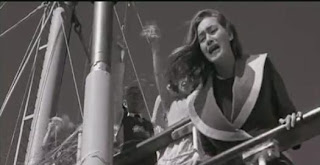
Clubbed to death scene.

A classic a thriller convention that Jackson uses in Heavenly Creatures, is the use of clocks. The close ups of the clock signify that time is a serious matter within the film. Time is used in Heavenly Creatures to foreshadow what time the girls will commit their murder and the gives the audience the impression that they are up against time.


Leading up to the murder, the two girls and Pauline's mum are walking down a hill on a very small path. The path is narrow and leads down a steep slope which makes the audience realise the mother had no chance of escaping. The lighting is ambient and natural which challenges the thriller conventions. The space in which the murder is done is very open and challenges the conventions of a thriller, because the space is very open and in broad daylight- this shows the naivety of the girls.

The low angle shot of their woman's feet going down the steps shows how steady they are moving, to be careful not to trip or slip. The soundtrack in this scene is very light and dreamlike, which reflects the girl's dreamlike state and the fact that they want to be together forever. The soundtrack fits in well with the slow motion emphasising that the scene is almost a fantasy.

During the scene the girls come across a muddy part of the steep path and a close up is used of Juliet's hand holding onto a tree for support, this could indicate the 'dirty behaviour' of both of their girls for murdering their mother and could reflect Juliet's mood for trying to, 'get a grip' on the crime she is about to commit, so she does not feel guilt.

Jackson uses many close ups in this scenes, predominantly of the girl's feet and hands. This shows their 'fidgety' nature and emphasise how important hands and feet are to the human body, because they can both cause much damage on someone else, this is also foreshadowing the murder that is yet to come.

The Mother stops to look at the time on her watch, the use of this is another reference to the importance of time within this film and the time that the mother is up against (till her murder). The use of shot-reverse-shot on both of the girl's faces indicates that they are now about to commit the murder. Juliet drops a purple gem on the floor, which catches the eye of the Mother. The gem is extremely sparkly and neatly cut, which contrasts greatly to the mud that it has landed on. The gem could also represent the girls and the 'muddy' patch that they are about to land themselves in by committing this 'dirty' crime.

As Pauline reaches into her school-girl satchel to get the stocking filled with bits of brick, the audience now know that this is for definite the time for the Mother to die. As Pauline takes the first hit with the brick-filled-stocking the screams from her mum contrast greatly with the dream-like soundtrack which has now ended. The blood that gushes out of the Mother's head and her ghastly screams add tension to a sense of realism to the film.

The crime is shown also with flashbacks in black and white. The use of black and white shows that the scenes are memory and that this is a separate part to the scene that is taking place, both linking the tragedy that is taking place.


Saturday, 10 March 2012

The Birds Clip Analysis


The Birds (1963)
Director: Alfred Hitchcock

Plot: A wealthy San Francisco socialite pursues a potential boyfriend to a small Northern California town that slowly takes a turn for the bizarre when birds of all kinds suddenly begin to attack people there in increasing numbers and with increasing viciousness.


The clip begins with an establishing, long shot of the main charact
er, Melanie sitting on a bench outside the park. In the back ground we can hear diagetic sound of children singing, this already creates an enigma, why is she waiting there? Hitchcock creates suspense easily here.

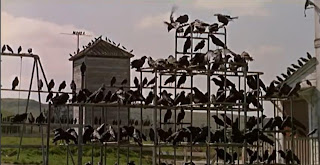
As Melanie begins to reach into her bag to light a cigarette, a black crow flies down and lands on the playground's climbing frame, she is not aware. There are myths that black crows are a bringer of 'bad luck', also, it is lead to believe that they are a sign of things to come, a bad omen. The shot then changes to a medium close up of Melanie trying to find a lighter in her handbag, we can no longer see the climbing frame in the background.

The shot changes, again, to a close up of the climbing frame, there are now four black crows instead of one. The shot changes three times from Melanie smoking and back to more and more birds landing on the climbing frame in the playground. Finally, Melanie takes notice to the sky and sees a crow flying towards the playground towards her, the long shot of the black crow in the sky makes the bird stand out from the blue sky, which seems pleasant, the two contrast greatly.

Again the shot changes to shot-reverse-shot of Melanie tracking the bird to where it is going to land, to the other shot of the bird soaring down towards the playground. Hitchcock uses a natural threat hear to give the impression something is going to happen, but the audience do not know what.


As the shot tracks the bird, it finally lands on the climbing frame, where there are dozens of birds now swarming the playground. The image is very threatening and suspense builds up.
Hitchcock changes the shot to a reaction shot of Melanie, we can see she is threatened by the birds and slowly jogs off to avoid attention. The shot changes from point-of-view shot to a tracking shot of Melanie.

Hitchcock manipulates the point of view shot as we watch Melanie be oblivious to what is happening behind her. As a few birds begin to gather the tension heightens, and Hitchcock only brings in the character's (Melanie) point-of-view shot to impact on how menacing the birds look.

Saturday, 25 February 2012

Analysis of Thriller Conventions used in Pyscho

Made in 1960
Director: Alfred Hitchcock
The Plot: A story about a young woman named Marion, who steals $40,000, she leaves the town and encounters a motel proprietor named Norman Bates, who seems to be dominated by his mother.

One of the first notices we get to know that it is of the thriller genre is through the sound. We hear non-diagetic sound w

hich creates a depressed feeling to the atmosphere which also builds a sympathetic view from the audience towar
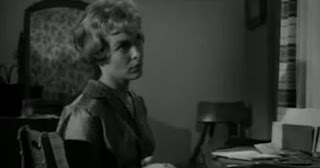
ds the character, Marion. Marion is pictured sitting alone in a hotel room writing down figures and then she sighs and tears them up. The tearing of the paper could be a foreshadowing tool used by Hitchcock to tell the audience of w
hat is to come.

The room is very bland and shadowed; which mirrors her corrupt personality.

Marion then walks to the bathroom where she
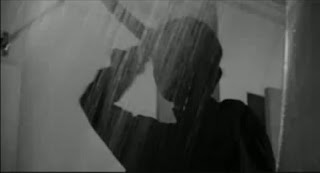
puts the ripped paper down the toilet and then pulls the handle to flush, this could imply that Marion is 'flushing away' her hopes of survival away. She then closes the door to the bathroom, isolating and confining herself into a very claustrophobic space. She takes off her silk dressing gown, which shows elegance and gets into the shower, completely naked. She shuts the shower curtain which makes a loud screechy noise and we can only see the silhouette of her body as she turns on the water- we can only hear the diagetic sound of the water being turned on, which creates realism, which also allows the audience to relate to Marion. The water could suggest her trying to 'wash off' the crimes that she has committed which creates a sense of self-security by making herself feel better, however as an audience we know that she is anything but safe, she is vulnerable because is naked and stuck in a confined space with nowhere to escape but the door.

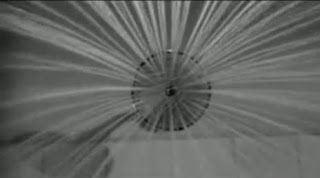
We then see various close ups of Marion's face, so the audience can depict her emotions. The worms eye shot of the shower makes the water look menacing and overpowering, which connotes danger.

As the shot changes to medium close up, almost high angle of Marion with her back to the curtain, we can see a silhouette creep towards her, getting darker and darker which means it is getting closer and closer, this creates tension and the darkness of the silhouette works well with the black and white making it seem more deathly and evil. We then, as an audience can depict that the silhouette is aggressive and meaning to cause Marion harm. As the figure draws back the curtain we see the contrast between his black silhouette and the white background (the bathroom).
The shots become quick and short, which is used to highlight the brutality of the stabbing/murder this man is committing. In the 1960's the audience watching this would have not been to see many other vicious thrillers such as Psycho so the use of diagetic sound heightens the tension within the scene. The loud, screechy, high pitched tones throughout the diagetic sound resembles that of a scream. After the stabbings, the camera slowly pans out and down to the bottom of the bath tub where the blood from Marion's body runs down into the plug, which shows the severity of his murder.

The thriller conventions used:
  • Femme Fatale
  • Mysterious Characters
  • Crime committing
  • Claustrophobic locations


Friday, 24 February 2012

Intertextuality- The Good, The Bad And The Ugly and Kill Bill Vol.2

In Kill Bill Vol.2 Tarantino uses a soundtrack which is featured in the film, The Good, The Bad and The Ugly. The use of intertextual references helps gives the audience a clue as to what might happen later on in the film or a warning of what’s to come. Tarantino’s use of intertextuality is to pay credit to the director, Sergio Leone, because he helped inspire Tarantino and also he is praising Leone’s music choice.


The purpose of this intertextual reference is to show the Bride in Kill Bill Vol.2 as the good who will eventually defeat the bad, Bill and then the ugly, whom is Bud. As an audience we make an assumption that the Bride will sooner or later kill Bill, hence the name of the film.

Tarantino used this reference to portray the Bride as an iconic hero. The bride is shown to have similarities with the Good from The Good, The Bad, and The Ugly, the link between the two is that the good is named, Blondie and the Bride in Kill Bill (Uma Thurman) has blonde hair. The Bride and Blondie are extremely cunning and determined to not be defeated, which indicates to us, as an audience that she will never give up- like Blondie.

In the finale of The Good The Bad and The Ugly, the Good kills the Bad which we can relate back to Kill Bill Vol.2 and the idea that the Bride will find Bill and hopefully kill him. Bud, who plays the ugly ends up digging in the finale of The Good The Bad and The Ugly, likewise does Bill in Kill Bill, however instead of digging for money he digs to kill the Bride.

Another intertextual reference used in Kill Bill, motivated by The Good the Bad and the Ugly is the landscaping. Both scenes are set in an isolated desert, and also briefly shows the grave yard, whereas in Kill Bill Vol. 2 the Bride is captured by Bill’s brother in a very isolated area then later buried in a grave yard.

As well as seeing the intertextuality within the two films, we can also see the change in attitudes towards woman. Traditionally the male plays the hero in an action thriller, whereas in Kill Bill we see the Bride being the ultimate hero.