Tuesday, 6 March 2012

Saturday, 25 February 2012
Analysis of Thriller Conventions used in Pyscho
Made in 1960
Director: Alfred HitchcockThe Plot: A story about a young woman named Marion, who steals $40,000, she leaves the town and encounters a motel proprietor named Norman Bates, who seems to be dominated by his mother.
One of the first notices we get to know that it is of the thriller genre is through the sound. We hear non-diagetic sound w
hich creates a depressed feeling to the atmosphere which also builds a sympathetic view from the audience towar
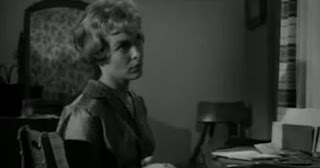 ds the character, Marion. Marion is pictured sitting alone in a hotel room writing down figures and then she sighs and tears them up. The tearing of the paper could be a foreshadowing tool used by Hitchcock to tell the audience of w
hat is to come.
The room is very bland and shadowed; which mirrors her corrupt personality.
Marion then walks to the bathroom where she
puts the ripped paper down the toilet and then pulls the handle to flush, this could imply that Marion is 'flushing away' her hopes of survival away. She then closes the door to the bathroom, isolating and confining herself into a very claustrophobic space. She takes off her silk dressing gown, which shows elegance and gets into the shower, completely naked. She shuts the shower curtain which makes a loud screechy noise and we can only see the silhouette of her body as she turns on the water- we can only hear the diagetic sound of the water being turned on, which creates realism, which also allows the audience to relate to Marion. The water could suggest her trying to 'wash off' the crimes that she has committed which creates a sense of self-security by making herself feel better, however as an audience we know that she is anything but safe, she is vulnerable because is naked and stuck in a confined space with nowhere to escape but the door.
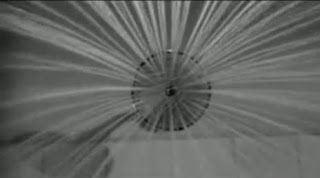
We then see various close ups of Marion's face, so the audience can depict her emotions. The worms eye shot of the shower makes the water look menacing and overpowering, which connotes danger.
As the shot changes to medium close up, almost high angle of Marion with her back to the curtain, we can see a silhouette creep towards her, getting darker and darker which means it is getting closer and closer, this creates tension and the darkness of the silhouette works well with the black and white making it seem more deathly and evil. We then, as an audience can depict that the silhouette is aggressive and meaning to cause Marion harm. As the figure draws back the curtain we see the contrast between his black silhouette and the white background (the bathroom).
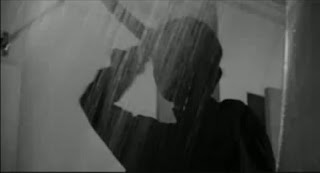
The shots become quick and short, which is used to highlight the brutality of the stabbing/murder this man is committing. In the 1960's the audience watching this would have not been to see many other vicious thrillers such as Psycho so the use of diagetic sound heightens the tension within the scene. The loud, screechy, high pitched tones throughout the diagetic sound resembles that of a scream. After the stabbings, the camera slowly pans out and down to the bottom of the bath tub where the blood from Marion's body runs down into the plug, which shows the severity of his murder.
The thriller conventions used:
- Femme Fatale
- Mysterious Characters
- Crime committing
- Claustrophobic locations
Friday, 24 February 2012
Intertextuality- The Good, The Bad And The Ugly and Kill Bill Vol.2
In Kill Bill Vol.2 Tarantino uses a soundtrack which is featured in the film, The Good, The Bad and The Ugly. The use of intertextual references helps gives the audience a clue as to what might happen later on in the film or a warning of what’s to come. Tarantino’s use of intertextuality is to pay credit to the director, Sergio Leone, because he helped inspire Tarantino and also he is praising Leone’s music choice.
The purpose of this intertextual reference is to show the Bride in Kill Bill Vol.2 as the good who will eventually defeat the bad, Bill and then the ugly, whom is Bud. As an audience we make an assumption that the Bride will sooner or later kill Bill, hence the name of the film.
Tarantino used this reference to portray the Bride as an iconic hero. The bride is shown to have similarities with the Good from The Good, The Bad, and The Ugly, the link between the two is that the good is named, Blondie and the Bride in Kill Bill (Uma Thurman) has blonde hair. The Bride and Blondie are extremely cunning and determined to not be defeated, which indicates to us, as an audience that she will never give up- like Blondie.
In the finale of The Good The Bad and The Ugly, the Good kills the Bad which we can relate back to Kill Bill Vol.2 and the idea that the Bride will find Bill and hopefully kill him. Bud, who plays the ugly ends up digging in the finale of The Good The Bad and The Ugly, likewise does Bill in Kill Bill, however instead of digging for money he digs to kill the Bride.
Another intertextual reference used in Kill Bill, motivated by The Good the Bad and the Ugly is the landscaping. Both scenes are set in an isolated desert, and also briefly shows the grave yard, whereas in Kill Bill Vol. 2 the Bride is captured by Bill’s brother in a very isolated area then later buried in a grave yard.
As well as seeing the intertextuality within the two films, we can also see the change in attitudes towards woman. Traditionally the male plays the hero in an action thriller, whereas in Kill Bill we see the Bride being the ultimate hero.
Thursday, 2 February 2012
Wednesday, 25 January 2012
Essex Boys Analysis
Essex Boys (2000)
Director:
Terry Winsor
The film is based around the murders of three drug dealers in Essex in 1995. Three drug dealers were lured to a secluded lane in Rettendon, Essex where they were murdered whilst sitting in their Range Rover.
As the credits role up at the beginning we can already see that the mood of the film is very dark and edgy. It has classic thriller conventions within the first five minutes. An establishing shot using non-ambient lighting establishes that the location is in a garage, a young man isolated. As the young man (Billy) steps into the car we hear diagetic sound of a voice over, spoken by the boy, meaning he is talking in first person. Already as an audience we can connect with this character.

As the man clears the window screen of the car we are introduced to the main character, Mr Jason Dean. His costume is very flamboyant which implies his confident nature, like in Jackie Brown, the character, Ordell also wears very exaggerated costumes- showing his power.
The shot then cuts to a close up on Jason's face, showing no emotion. This shows his power.
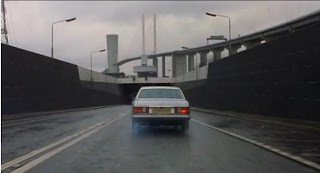 The shot then changes to a point of view shot of someone driving behind a Mercedes. Because Jason has an expensive car and a chauffeur we can show his authority over people as well as his wealth and power, a classic thriller convention.
The grey skies and modern motorway really establish that the location is Britain.
As the car drives into the vanishing point (the tunnel) it represents the barrel of a gun as well as showing that a tunnel is a claustrophobic space.
 The shot then cuts to the reflection of the lights on the windscreen as the Billy drives through the tunnel. The bars of light reflect jail bars, implying that Jason has been in prison or possibly a sign of what is to come, maybe Billy is going to be imprisoned later on?
The shot changes to a side profile shot of Jason as he 'prepares' to meet his old friend- his facial expression is not happy, so we can tell that he is not happy with this 'friend'. Jason then steps out of the car, leaving Billy inside. As an audience we establish that they are now in a factory, very bleak, artificial lighting shows the strain of the scene and what is to come.
After Jason has thrown acid onto the man's face we chucks him into the van. The white van creates an enigma as we do not know where it is from, what it is for or where it is going. Although Jason has just thrown acid onto a man's face he seems more interested in the fact that he has it on his shirt; this shows his vanity and selfishness.
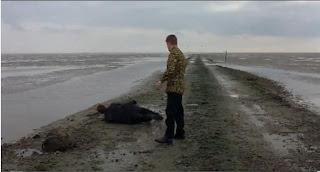
Jason and Billy then take the man to the Essex marshes. The marshes are very isolated, bleak, which bides well with Jason's personality, which is unpredictable. The primeval landscape is wild, there is no sign of culture suggesting that Jason is going to become a predator in this wasteland where there are no boundaries.
Jason then begins to beat the man up again, and then leaves the man stranded there. It then cuts to a long shot of the white van as it drives away- it exits Jason's predatory land.
Director:
Terry Winsor
The film is based around the murders of three drug dealers in Essex in 1995. Three drug dealers were lured to a secluded lane in Rettendon, Essex where they were murdered whilst sitting in their Range Rover.
As the credits role up at the beginning we can already see that the mood of the film is very dark and edgy. It has classic thriller conventions within the first five minutes. An establishing shot using non-ambient lighting establishes that the location is in a garage, a young man isolated. As the young man (Billy) steps into the car we hear diagetic sound of a voice over, spoken by the boy, meaning he is talking in first person. Already as an audience we can connect with this character.

As the man clears the window screen of the car we are introduced to the main character, Mr Jason Dean. His costume is very flamboyant which implies his confident nature, like in Jackie Brown, the character, Ordell also wears very exaggerated costumes- showing his power.
The shot then cuts to a close up on Jason's face, showing no emotion. This shows his power.
 The shot then changes to a point of view shot of someone driving behind a Mercedes. Because Jason has an expensive car and a chauffeur we can show his authority over people as well as his wealth and power, a classic thriller convention.
 The grey skies and modern motorway really establish that the location is Britain.
As the car drives into the vanishing point (the tunnel) it represents the barrel of a gun as well as showing that a tunnel is a claustrophobic space.

The shot changes to a side profile shot of Jason as he 'prepares' to meet his old friend- his facial expression is not happy, so we can tell that he is not happy with this 'friend'. Jason then steps out of the car, leaving Billy inside. As an audience we establish that they are now in a factory, very bleak, artificial lighting shows the strain of the scene and what is to come.
After Jason has thrown acid onto the man's face we chucks him into the van. The white van creates an enigma as we do not know where it is from, what it is for or where it is going. Although Jason has just thrown acid onto a man's face he seems more interested in the fact that he has it on his shirt; this shows his vanity and selfishness.

Jason and Billy then take the man to the Essex marshes. The marshes are very isolated, bleak, which bides well with Jason's personality, which is unpredictable. The primeval landscape is wild, there is no sign of culture suggesting that Jason is going to become a predator in this wasteland where there are no boundaries.
Jason then begins to beat the man up again, and then leaves the man stranded there. It then cuts to a long shot of the white van as it drives away- it exits Jason's predatory land.


Friday, 20 January 2012
The Third Man Analysis
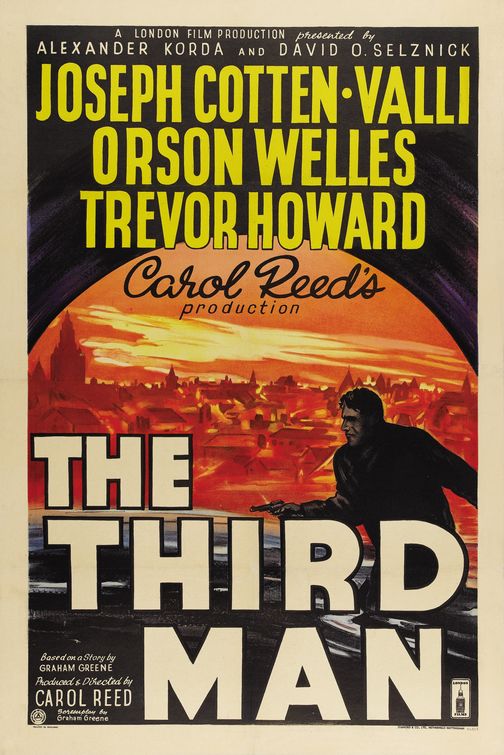
Director: Carol Reed
The Third Man is a classic noir thriller. During the titles of this film the sound track plays:
It begins with a voice over like the beguinning of Essex Boys. Close up of hands on the Black Market, this represents the time of working outside the law, selling watches.
An image of broken glass shows the fractured and defeated Vienna, then the body floating indicates the genre of the film and and that nobody cares. The sunken ship shows the distressed city.
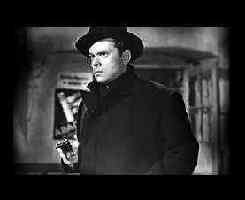
The outfit is a classic thriller convention, the trilby hat links to Once Upon A Time In America. The whole outfit is black which symbolises darkness, which could symbolise what is to happen.
The man then walks under the ladder, which is known as an unlucky thing to do, a sign of what is to come.
The lighting is chiaroscuro, non-ambient.
It then cuts to a tilt, low angle shot which creates a sense of disorientation. As the German man begins to speak there are no subtitles on the screen which puts us as an audience in the same shoes as the main character, Holly. The high angle shows the vulnerability.
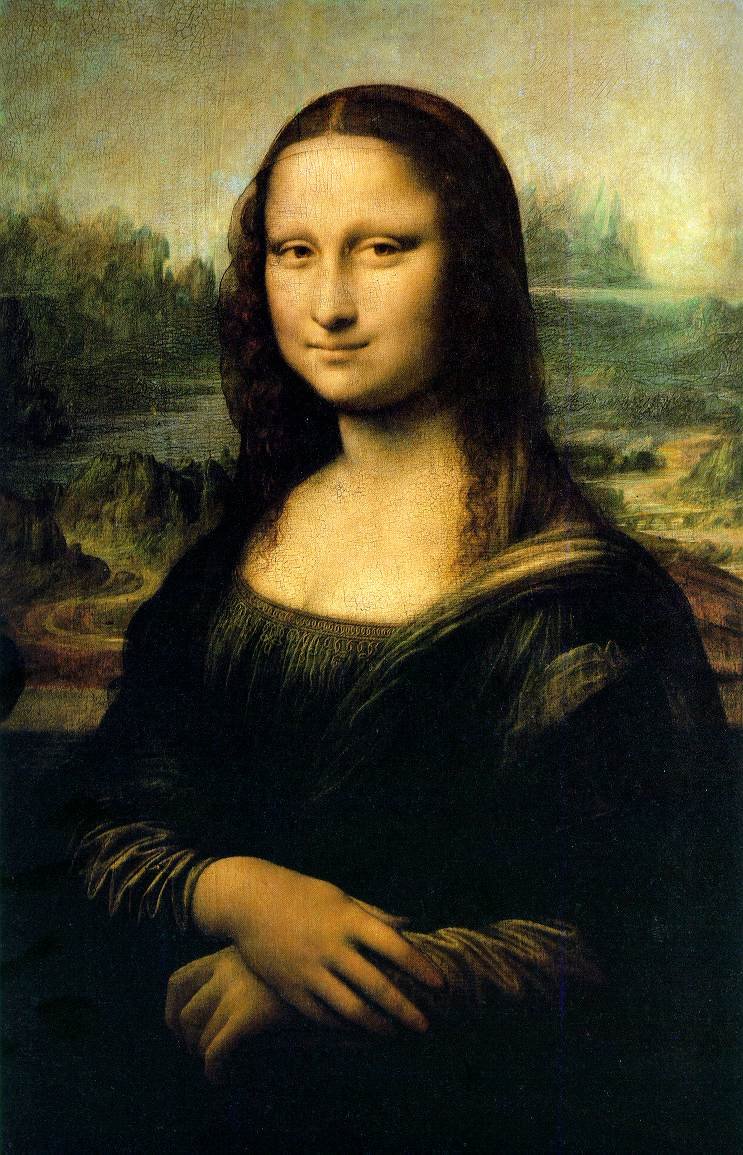
The shot then cuts to a girl, the introduction of Anna. Her is enigmatic, the audience find it hard to read which refers to the famous portrait of the, Mona Lisa.
We can see that the mysterious Harry Limes and Holly have a close friendship like Ordell and Louis in Jackie Brown. As an audience we start to paint a picture of Harry Limes' world, it is very upside down because of him being a criminal- Hell = Heaven and Heaven = Hell.
Later on we see that Anna is in fact an actress, she can put on masks and play roles which makes her even harder to read.

A tilt shot of Holly looking down a street shows the chiaroscuro and non-ambient lighting, as he stands on a wet and dark street, a classic thriller convention, like in Jackie Brown where we see Ordell drive off into the vanishing point.
Later on we see a man shouting in the street, there is panic which adds anxiety to the audience. A little boy shouts and points at Holly, then Anna pulls him away and they decide to walk off, but the child carries on following Anna and Holly, the child is almost like some sort of demon. The child of the night represents the hostility of Vienna to the allies (France, Germany, USA and England). As Holly begins to run, the city becomes a labyrinth, the buildings turn into on-lookers which refers back to earlier in the film.
Cat got your tongue scene:
A light goes on, chiaroscuro lighting, the light on Harry's face, his facial expression is very 'quizacle'.
Subscribe to:
Posts (Atom)